Tokenizing Real World Assets: Real Estate on the Blockchain
 Jordyn Laurier
- Tokenized real-world assets (RWAs) convert physical property into blockchain tokens, enabling fractional ownership, global access, and liquid markets for real estate.
- Blocksquare uses Envio's indexing infrastructure to power its DeFi platform and marketplace, indexing over 400,000 Ethereum Mainnet events in under 20 minutes.
- Envio replaced The Graph for Blocksquare, delivering faster indexing, better developer experience, and a more responsive data backend for their onchain real estate platform.
Real estate has long been considered a reliable investment, yet entry barriers have traditionally been high. High costs, complex ownership models, and limited liquidity have made the market inaccessible to many. Blockchain technology is changing this by enabling the tokenization of real-world assets (RWAs), making property investment more accessible, transparent, and liquid. Real estate is expected to become the largest type of tokenized asset by 2030, with the tokenized real estate sector estimated to reach close to $30 billion by 2034, according to Blocksquare.
What is an RWA?
A Real-World Asset (RWA) refers to any physical asset with intrinsic value in the real world, such as property, commodities, or art. These assets have long been the foundation of wealth accumulation, but the traditional processes for transferring and investing in them have been complex, costly, and inefficient. Blockchain technology changes this by enabling the creation of digital representations of RWAs, making them easier to trade, fractionalize, and own.
How do tokenized RWAs work?
Tokenization involves converting a physical asset into a digital token on a blockchain, representing a fraction of the asset's ownership. In the case of real estate, tokenized RWAs are blockchain-based tokens that represent a stake in a property or collection of properties.
This process allows investors to buy, sell, and trade ownership stakes in real estate with ease. Each token represents a specific portion of ownership in the underlying property, providing access to borderless real estate markets that were previously inaccessible due to high capital requirements or jurisdictions. These tokens can be traded on blockchain platforms, increasing liquidity and offering flexibility in a traditionally illiquid market. Protocols like Blocksquare are at the forefront of this shift, bridging traditional real estate with blockchain technology.
What is Blocksquare?
Blocksquare is a blockchain platform that enables businesses to tokenize real estate, bridging the gap between traditional property investment and blockchain innovation. The platform provides the tools necessary for businesses to tokenize property values, launch marketplace platforms, and connect stakeholders to opportunities in tokenized real estate.
At the heart of Blocksquare is Oceanpoint, a DeFi platform where users can stake real estate-backed tokens, earn rewards, and participate in a growing ecosystem of tokenized properties. Powered by the BST utility token, Oceanpoint makes property investment more accessible, transparent, and efficient.
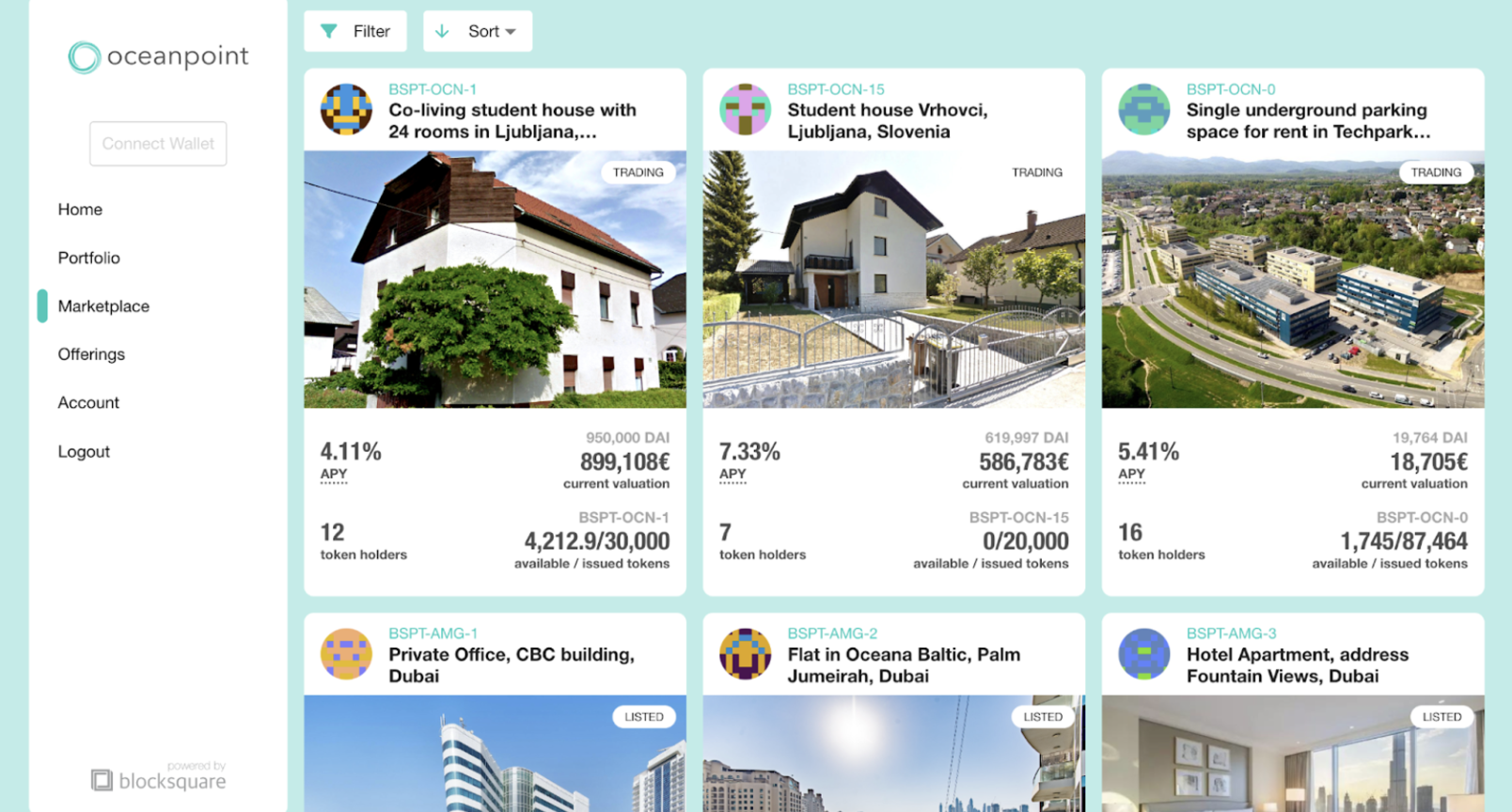
Screenshot of Oceanpoint's Real Estate Marketplace
Why RWAs matter
Tokenizing real estate brings several benefits beyond traditional property investment:
- Lower barriers to entry: Fractionalizing property ownership lets individuals invest with smaller amounts of capital rather than buying entire properties.
- Liquidity: Tokenized real estate can be traded, making it much more liquid than traditional real estate investments, which often require years to realize returns.
- Transparency: Ownership records are transparent, tamper-proof, and easily verifiable, reducing the risk of fraud or disputes.
- Global access: Investors from around the world can participate in tokenized real estate markets, democratizing access to property investments that were previously limited to local investors or large institutions.
Real estate is one category. Tokenized equities are another, and they now have a chain of their own. See how to index every tokenized asset on Robinhood Chain for a worked example on the tokenized stock L2.
Envio's role in powering Blocksquare's ecosystem
Envio plays a crucial role in powering Blocksquare's infrastructure, ensuring the seamless operation and scalability of tokenized real estate. What started as a community-driven initiative for Blocksquare evolved into a strong partnership, with Envio's blockchain indexing solution now fully integrated into their ecosystem.
By leveraging Envio's indexing infrastructure, Blocksquare benefits from real-time data retrieval, enhanced data management, and improved efficiency. Envio's platform aggregates data into a unified database, streamlining the process of tracking ownership and transactions while reducing infrastructure costs and latency.
"Envio is really onto something. Their tech is fascinating, and the developer experience is unparalleled. After years of working with The Graph, it's refreshing to see new players like Envio pushing the boundaries. The team is responsive, innovative, and a pleasure to work with." - Simon Kruse, Head of Web3 Development and Governance Board Member at Blocksquare
Envio optimizes performance significantly, enabling the indexing of over 400,000 Ethereum Mainnet events in under 20 minutes, a task that previously took hours with The Graph. This gives web3 developers significantly faster access to onchain data, speeding up development and testing cycles and ensuring scalable data access as applications grow.
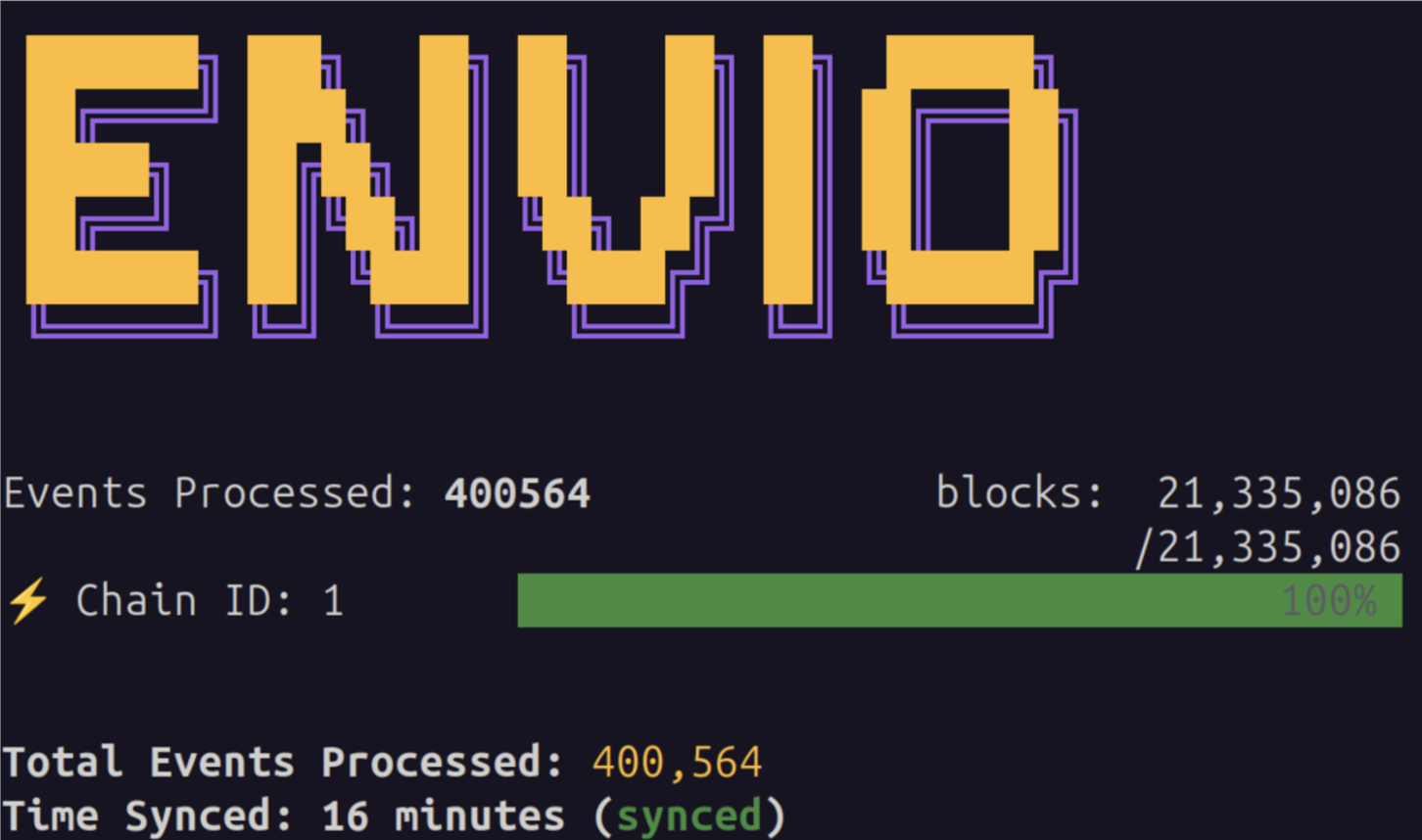
Envio's integration allows Blocksquare to power its DeFi platform and marketplace with a performant backend that stores important data points such as available liquidity and asset pools, token investment listings, APY calculations, token holders, transaction history, supply information, and any other data points of interest.
Conclusion
As the industry continues to evolve, tokenized RWAs will likely become a dominant force in real estate investment, democratizing access to property markets and offering new opportunities for investors worldwide. Blocksquare demonstrates how blockchain can reshape the real estate sector, unlocking the potential of tokenized assets for a more inclusive and innovative future in property investment.
Frequently asked questions
What is a tokenized real-world asset (RWA)?
A tokenized RWA is a digital token on a blockchain that represents fractional ownership of a physical asset such as real estate, commodities, or art. Each token corresponds to a specific share of the underlying asset, enabling investors to buy, sell, and trade ownership stakes without needing to purchase the entire asset.
How does Envio's indexing help a tokenized real estate platform like Blocksquare?
Envio HyperIndex processes onchain events (such as token transfers, staking actions, and liquidity updates) in real time and stores them in a structured database accessible via GraphQL. For Blocksquare, this means their DeFi platform can display live APY calculations, token holder counts, and transaction history without the latency or cost overhead of querying an RPC node directly or using a slower indexer like The Graph.
Why did Blocksquare switch from The Graph to Envio?
The Graph requires a separate subgraph for each chain and has slower historical sync speeds. Envio uses a single config to cover all chains, delivers up to 2000x faster historical data retrieval via HyperSync, and offers a more responsive developer experience. Blocksquare's engineering team noted that the switch resulted in indexing 400,000+ events in under 20 minutes, versus hours on The Graph.
Is tokenized real estate legally recognized?
Legal recognition varies by jurisdiction. Tokenized real estate platforms typically operate within existing securities laws, and the token usually represents an economic interest or fractional ownership right rather than direct legal title to the property. Always verify the regulatory framework applicable to the specific platform and jurisdiction.
What types of onchain data does Envio index for a real estate tokenization platform?
Envio can index any smart contract events, including token transfers, staking and unstaking events, liquidity pool changes, governance actions, and custom application events. For Blocksquare, this includes tracking token holders, investment listings, transaction history, supply information, and APY-relevant data points, all served through a unified GraphQL API.
Build With Envio
Envio is the fastest independently benchmarked EVM blockchain indexer for querying real-time and historical data. If you are building onchain and need indexing that keeps up with your chain, check out the docs, run the benchmarks yourself, and come talk to us about your data needs.
Stay tuned for more updates by subscribing to our newsletter, following us on X, or hopping into our Discord.
Website | X | Discord | Telegram | GitHub | YouTube | Reddit